Restoration fieldwork on the Aldermen Islands

Our work

Restoring kelp forests, one reef at a time.

Kina barrens have stripped temperate reefs of their kelp forests across the Hauraki Gulf. AIMERT is testing whether whole-reef urchin removal can reverse that damage — starting at Sugarloaf Rocks.

The urchin barren problem

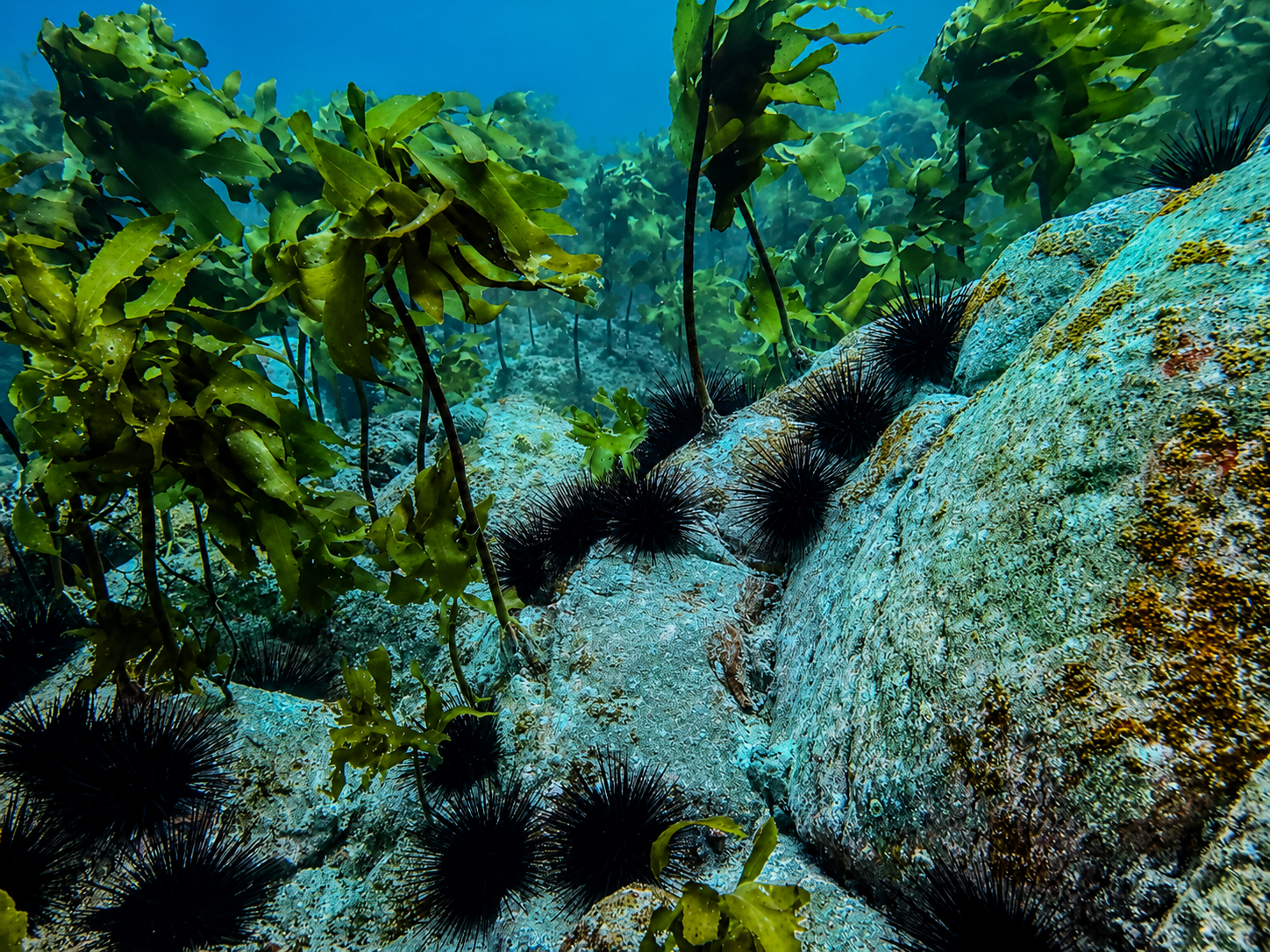
The long-spined sea urchin Centrostephanus rodgersii is a keystone species of New Zealand's temperate reef ecosystem. At natural densities, urchins graze algal turf and play an important role in reef ecology. But when populations exceed ecological thresholds — driven by the removal of predators such as snapper and crayfish — kelp forests collapse into persistent urchin barrens: areas of reef stripped of all macroalgal cover, with dramatically reduced habitat complexity, biodiversity, productivity, and resilience.

Urchin barrens are not a natural state. They are a symptom of ecological imbalance — and they are reversible. AIMERT's flagship research project at Sugarloaf Rocks is designed to demonstrate that complete manual removal of urchins from a geographically isolated offshore reef can trigger rapid, sustained kelp forest recovery. If successful, the model can be replicated across degraded reefs throughout the Hauraki Gulf.

Diver conducting baseline reef survey at Sugarloaf Rocks
01

Baseline survey

Before any intervention begins, we establish a comprehensive ecological baseline across the full reef at Sugarloaf Rocks. Dive teams map urchin density, kelp cover, macroalgal biomass, and reef biodiversity across both the degraded eastern face and the partially intact western face. This baseline is the scientific foundation against which all future recovery data is measured.

~6 haReef area surveyed
40 mMaximum survey depth
2 facesEast barren / west kelp contrast
Sea urchin on degraded reef barren
02

Whole-reef urchin removal

Volunteer divers work systematically across the reef, destroying urchins in situ using a custom hand tool designed to split or crush the test and internal organs in a single push-and-twist motion. The urchin is killed immediately and left on the reef, providing food resources for scavengers and fish. The citizen science model means the scope of the work is not constrained by a research budget — every volunteer dive extends what the project can achieve.

In situDestruction method — no collection required
150/dayIndividual diver legal take limit
0Cost to project per volunteer dive
Kelp forest recovery on restored reef
03

Ecological monitoring

Following initial clearance, dive teams return on a regular schedule to monitor kelp recruitment, macroalgal recovery, and changes in reef biodiversity. We track rates of larval urchin resettlement — the only recolonisation pathway available given the geographic isolation of Sugarloaf Rocks from the Aldermen Islands — and conduct maintenance removal to prevent re-establishment of barrens before kelp canopy is restored.

7–12Months to expected kelp recruitment
~3 yrActive monitoring and maintenance period
5–10 yrProjected biodiversity recovery timeline
Volunteer scuba divers preparing for citizen science dive
04

Citizen science

The DiveCat — a 12-metre aluminium powercat skippered by project lead Norman Holtzhausen — regularly takes recreational divers to the Aldermen Islands and Sugarloaf Rocks. Trained volunteer divers are the engine of this project. They contribute the dive hours that make whole-reef clearance feasible, and they build a community of people with a direct, personal stake in the recovery of these reefs. No specialist qualifications are required — just open-water certification and a willingness to get in the water.

DiveCat12 m aluminium powercat, project vessel
10 nmOffshore from Tairua
OpenVolunteer diver recruitment — join us

Be part of the recovery

Sugarloaf Rocks is an opportunity to demonstrate, at scale, that kelp forest restoration is achievable on New Zealand's offshore reefs. Every volunteer dive and every donation brings that demonstration closer.

AIMERT

Aldermen Islands Marine Ecology Restoration Trust

Restoring what was lost. Protecting what remains.

Get Involved

The Aldermen Islands need your support. Every contribution funds real restoration work in the field.

Support the Mission

© 2026 Aldermen Islands Marine Ecology Restoration Trust. All rights reserved.

Registered charitable trust · New Zealand