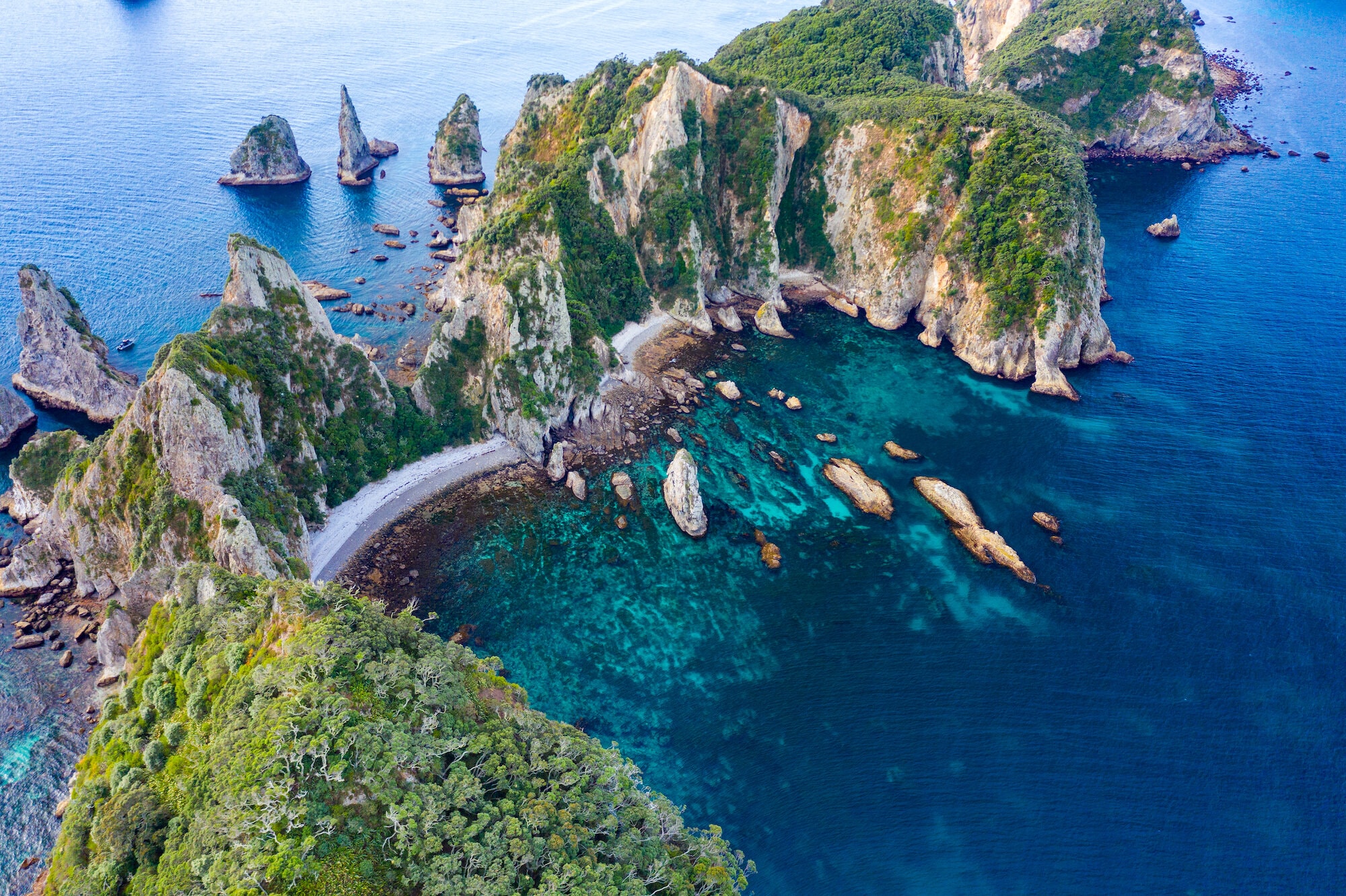
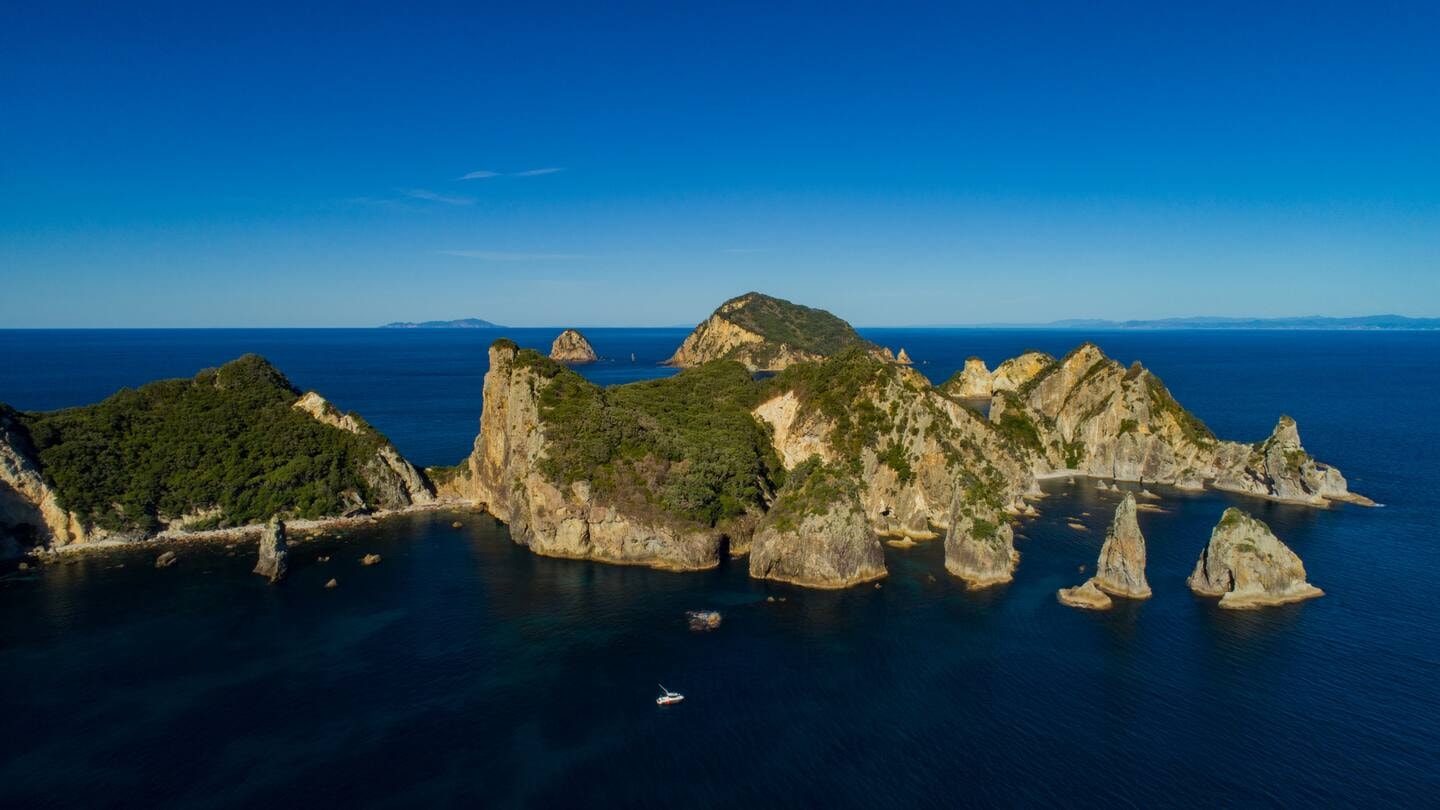
The Aldermen Islands from the air

The Islands

Ancient, isolated, irreplaceable.

The Aldermen Islands rise from the sea bed in the Bay of Plenty, just 10 nautical miles off the Coromandel coast — a scattered archipelago of volcanic rock, native forest, and extraordinary wildlife found nowhere else on Earth.

A place apart

Formed by volcanic activity millions of years ago, the Aldermen Islands (Ruamahua-iti) have been shaped by wind, sea, and time into a series of dramatic rocky outcrops and sheltered coves. Their isolation from the mainland made them a refuge for species that disappeared elsewhere — and that same isolation makes them extraordinarily vulnerable.

The islands sit between two new marine high protection areas, and are protected as a wildlife sanctuary. Access is restricted to authorised researchers and conservation workers, preserving the ecological integrity that makes the islands so significant.

10 nmOff the Coromandel coast
~170 haTotal land area
7Main islands and islets
~30 mHighest point
Island coastline and native bush
A seabird stronghold

Seabirds

A seabird stronghold

The Aldermen Islands support one of the most significant seabird colonies in the Hauraki Gulf. Flesh-footed shearwaters, grey-faced petrels, little blue penguins, and red-billed gulls nest here in large numbers. The islands' rocky cliffs and dense scrub provide ideal nesting habitat — but only when predators are kept in check.

Grey-faced petrels return to the same burrow year after year, sometimes for decades. A single breeding pair may raise fewer than one chick per season — making every nest critically important.

Lizards and living fossils

Reptiles

Lizards and living fossils

The islands are home to several native lizard species including the copper skink and the shore skink, as well as populations of tuatara — a reptile lineage that has survived unchanged for over 200 million years. Tuatara are found only in New Zealand, and island sanctuaries like the Aldermen are among their last remaining strongholds.

Tuatara can live for over 100 years and continue growing until they are around 35. The individuals on the Aldermen Islands may have been alive before European settlement of New Zealand.

Beneath the surface

Marine environment

Beneath the surface

The waters surrounding the Aldermen Islands are equally rich. Rocky reefs draped in kelp support snapper, blue mao mao, and crayfish, while the deeper channels are feeding grounds for dolphins and migratory whales. The health of the terrestrial ecosystem and the marine environment are deeply connected — seabird colonies fertilise the soil, and nutrient runoff feeds the reef.

The nutrient cycle between nesting seabirds and the surrounding reef is one of the most important ecological relationships on the islands. More birds means a healthier sea.

What threatens the islands

Despite their protected status, the Aldermen Islands face serious and ongoing threats from introduced species.

Rats

Pacific rats (kiore) and ship rats prey on seabird eggs, chicks, and lizards. A single rat incursion can devastate a nesting colony within a season.

Urchin barrens

The reduction of predators has allowed spiny sea urchins to strip the surrounding kelp gardens and denude the marine environment.

Climate change

Rising sea temperatures affect fish availability for seabirds, while more frequent storm events threaten low-lying nesting areas.

Help protect what remains

The Aldermen Islands are one of New Zealand's most significant island sanctuaries. With sustained effort and funding, we can secure their future for the species that depend on them.

AIMERT

Aldermen Islands Marine Ecology Restoration Trust

Restoring what was lost. Protecting what remains.

Get Involved

The Aldermen Islands need your support. Every contribution funds real restoration work in the field.

Support the Mission

© 2026 Aldermen Islands Marine Ecology Restoration Trust. All rights reserved.

Registered charitable trust · New Zealand