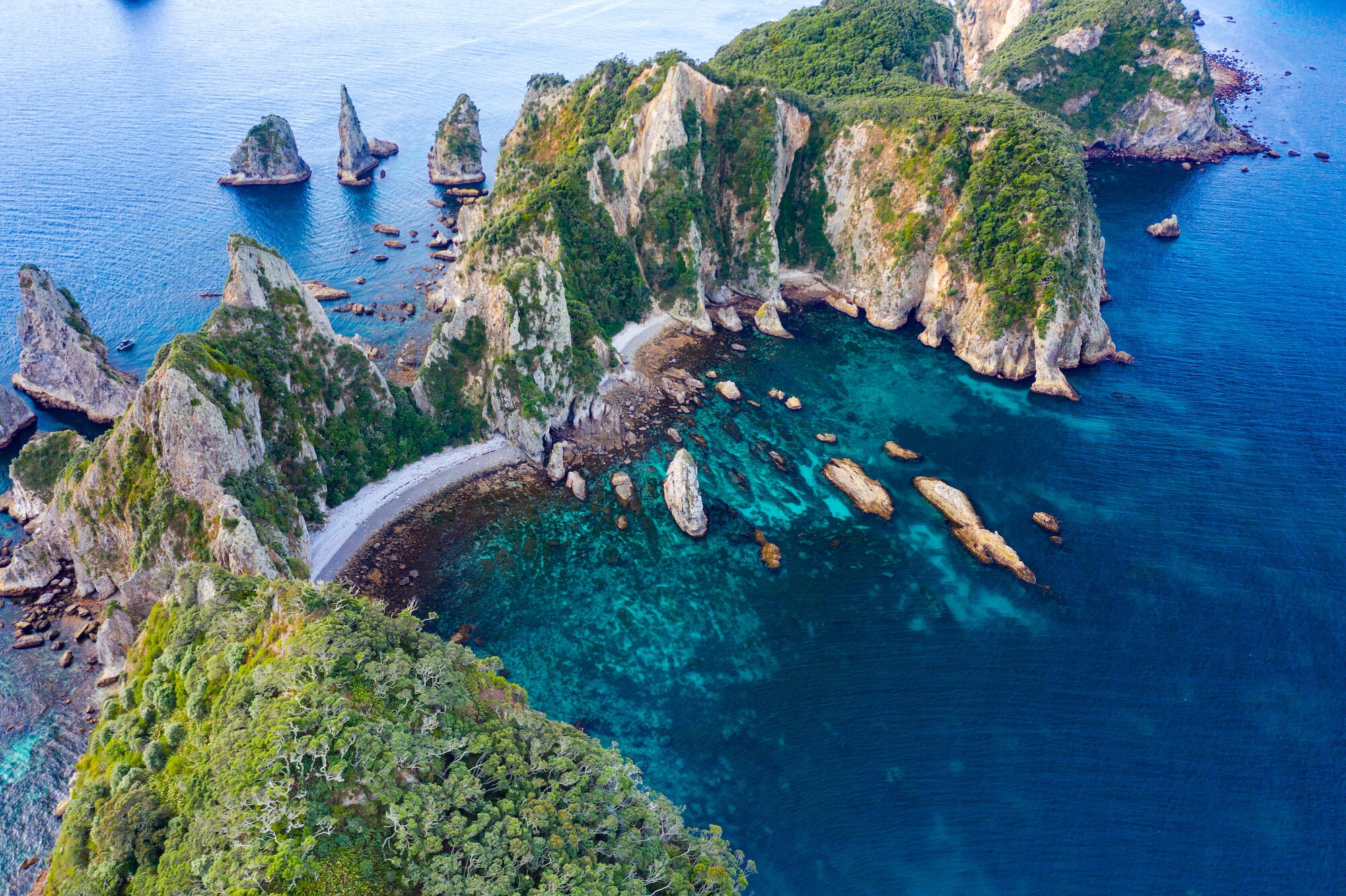
Dramatic coastline of the Aldermen Islands

Restoring the Aldermen Islands.

One of New Zealand's most ecologically significant island chains is under threat. AIMERT is on the ground — removing invasive species, recovering native habitat, and giving the ocean a fighting chance.

"Kelp forests are a vital lifeline for our oceans, but are increasingly threatened by overpopulated sea urchins."

Our Mission

AIMERT works to restore the Aldermen Islands to their pre-human ecological state — Surveying the current state of kelp forests, mapping our urchin barrens and actively working to clear spiny sea urchins from selected areas.

This is long-term, science-led work. It demands sustained commitment from people who understand what is at stake.

Comparable projects

What the science shows.

Kina barren reversal is not theoretical. New Zealand has decades of evidence from marine reserves and experimental removal trials showing that kelp forests recover when urchin pressure is removed.

Kelp forest reef recovery at Leigh Marine Reserve
Leigh Marine Reserve

The proof of concept: Goat Island.

Established in 1975 as New Zealand's first marine reserve, the Cape Rodney–Okakari Point reserve at Leigh is the foundational evidence base for kina barren reversal. As snapper populations recovered inside the reserve, predation pressure on kina increased — densities fell, and kelp canopy re-established across previously barren reef. Forty years of monitoring data from NIWA and the University of Auckland document the recovery in detail.

Rich reef biodiversity at the Poor Knights Islands marine reserve
Poor Knights Islands

Full protection, full recovery.

Declared a full marine reserve in 1998, the Poor Knights Islands off Tutukaka now support some of the most biodiverse reef in New Zealand. NIWA surveys document dense kelp canopy, abundant snapper and crayfish, and dramatically reduced kina densities compared to adjacent fished reefs. The Poor Knights demonstrate what offshore reef ecosystems look like when fishing pressure is removed entirely.

Researcher conducting kina removal trial on New Zealand reef
Active removal trials

Manual removal works — at small scale.

Experimental kina removal trials at sites including Tāwharanui and in the Marlborough Sounds have confirmed that manual clearance triggers rapid kelp recruitment — typically within one to two growing seasons. These trials, conducted by NIWA and university research teams, established the biological feasibility of the approach AIMERT is now testing at whole-reef scale at Sugarloaf Rocks.

Ocean waves at the Aldermen Islands

The islands are counting on us.

Restoration work is ongoing. Funding is not guaranteed. Your support keeps our teams in the field and the science moving forward.

AIMERT

Aldermen Islands Marine Ecology Restoration Trust

Restoring what was lost. Protecting what remains.

Get Involved

The Aldermen Islands need your support. Every contribution funds real restoration work in the field.

Support the Mission

© 2026 Aldermen Islands Marine Ecology Restoration Trust. All rights reserved.

Registered charitable trust · New Zealand